
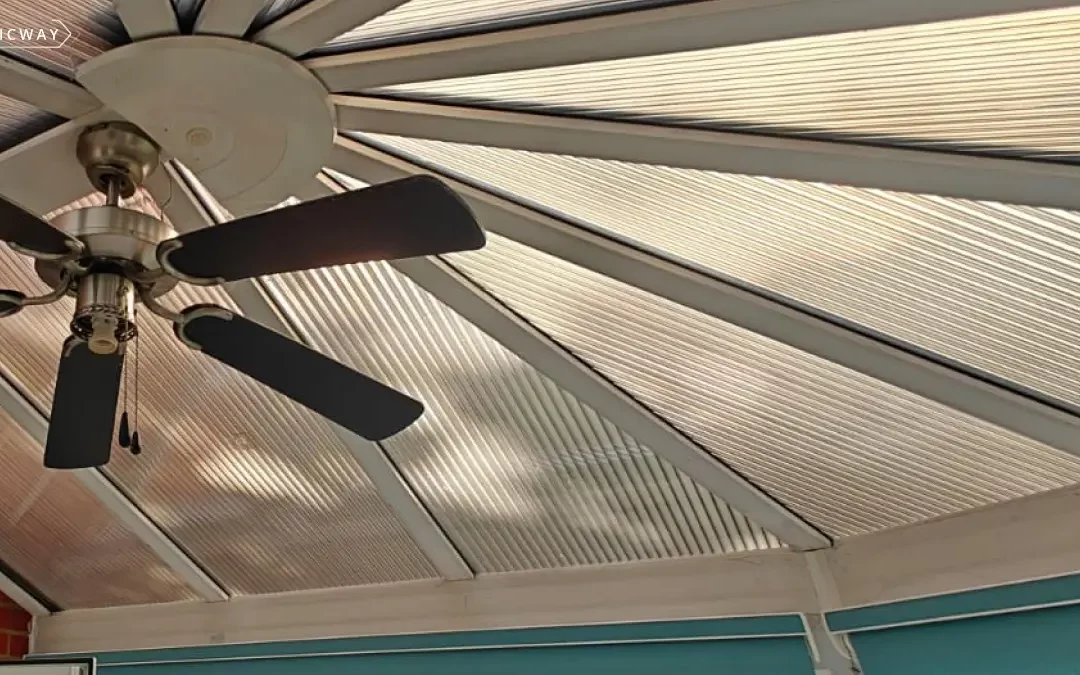
A conservatory should give you valuable extra living space, but for many homeowners it becomes a room that’s too hot in summer and too cold in winter.
During warmer weather, the temperature can quickly become uncomfortable. Then winter arrives and the same conservatory struggles to retain heat, leaving you with a room that may go unused for months at a time.
So, how can you make a conservatory comfortable enough to use all year round?
One of the most important places to start is the conservatory roof. Improving its insulation, alongside sensible changes to heating, ventilation and glazing, can make a significant difference to how comfortable the room feels throughout the year.
Why Is My Conservatory Too Hot in Summer and Too Cold in Winter?
Traditional conservatories often contain large areas of glass combined with a glass or polycarbonate roof.
While this creates a bright and airy room, older roofing systems can make temperature control difficult.
On sunny days, heat from the sun can cause the conservatory to become very warm. During colder weather, heat can escape through poorly insulated areas, making the room difficult and potentially expensive to keep comfortable.
This is why many conservatories end up being used mainly during spring and autumn rather than as genuine year-round living spaces.
Start With the Conservatory Roof
If you want to make better use of your conservatory throughout the year, the roof is an important area to consider.
Older polycarbonate and some glazed roofs may offer limited insulation compared with modern insulated alternatives.
One option is to replace existing roof sections with insulated conservatory roof panels, sometimes referred to as thermal or ThermoPanels.
Rather than removing the entire conservatory, suitable insulated panels can often be fitted into the existing roof structure, depending on its design and condition.
This can be a practical way of improving the thermal performance of an existing conservatory without necessarily undertaking a complete roof replacement.
What Are Insulated Conservatory Roof Panels?
Insulated conservatory roof panels are designed to provide better thermal insulation than traditional lightweight roof sheets.
They typically consist of several layers, including an insulating core, which helps reduce the transfer of heat through the roof.
In winter, insulation helps slow the loss of heat from the conservatory.
During warmer weather, it can also help reduce heat transfer through the roof, although ventilation, shading, glazing and the orientation of the conservatory will still influence the temperature inside.
The aim isn’t to make the conservatory permanently warm or cool. It’s to create a room with a more manageable and stable internal temperature.
Can I Replace a Polycarbonate Conservatory Roof With Insulated Panels?
In many cases, existing polycarbonate roof panels can be replaced with insulated panels while retaining a suitable existing conservatory roof structure.
This can make it an attractive option for homeowners who are generally happy with their conservatory but want to improve its comfort.
The existing roof should be assessed before making changes. Panel thickness, roof construction, glazing bars and the condition of the existing structure all need to be considered to determine whether replacement panels are suitable.
Will Insulating My Conservatory Roof Make It Warmer in Winter?
Insulation works by slowing heat transfer.
If your conservatory loses a significant amount of heat through its roof, improving the roof insulation can help the room retain heat for longer.
That doesn’t mean you will never need heating. During cold winter weather, most conservatories will still require an appropriate heat source if you want them to feel like another living room.
The difference is that improved insulation can make it easier to maintain a comfortable temperature instead of constantly losing heat through the roof.
Can Insulated Roof Panels Keep My Conservatory Cooler in Summer?
They can help reduce heat entering through the roof, particularly when replacing roof materials that allow significant solar heat into the room.
However, the roof isn’t the only factor.
A conservatory with large south-facing glass panels can still become warm on sunny days. For the best results, roof insulation should form part of a wider approach that may include:
- Opening windows and roof vents
- Improving ventilation
- Using blinds or solar shading
- Improving glazing where appropriate
- Reducing direct solar gain
- Using suitable cooling or air conditioning during very hot weather
Combining these measures can make the room considerably more comfortable during summer.
Improve Your Conservatory Glazing
The walls of most conservatories contain a significant amount of glass, so the condition and performance of the glazing also matter.
If you have old or failed double glazing, upgrading the sealed glass units may improve thermal performance.
Look out for problems such as:
- Misted double glazing
- Condensation between the panes
- Damaged window seals
- Draughts around windows or doors
- Windows that no longer close correctly
You don’t necessarily need to replace the entire conservatory because of failed glass. Depending on the condition of the frames, individual double-glazed units can often be replaced.
Check for Draughts
Even a well-insulated roof won’t achieve its full potential if cold air is entering around doors and windows.
Check your conservatory for obvious draughts, particularly around:
- External doors
- Window frames
- Opening windows
- Roof vents
- Seals and gaskets
Older seals can deteriorate over time, and windows or doors may need adjusting.
Addressing these relatively small problems can contribute to a more comfortable room.
Think About Heating
If you want to use your conservatory as a genuine living space during winter, you’ll probably need some form of heating.
The appropriate solution will depend on the conservatory, your existing heating system and how frequently you use the room.
Options can include suitable electric heating, air-conditioning systems with heating functions or other appropriately installed heating solutions.
Improving insulation before increasing the amount of heating can make sense because it helps reduce unnecessary heat loss.
Don’t Forget Summer Ventilation
Keeping heat in during winter is only half of the challenge.
During summer, you need a way to remove excess heat.
Opening windows and roof vents can encourage airflow through the conservatory. Blinds can also help reduce direct sunlight entering through large glazed areas.
For conservatories that experience significant overheating, mechanical ventilation or air conditioning may also be worth considering.
Can Roof Panels Reduce Rain Noise?
Anyone with a polycarbonate conservatory roof will probably be familiar with the sound of heavy rain.
Replacing lightweight roof sheets with insulated panels may help reduce the amount of rain noise entering the conservatory, depending on the panel construction and overall roof system.
For homeowners who use their conservatory as an office, dining room or television room, reducing noise can be another benefit of upgrading the roof.
Can I Turn My Conservatory Into a Proper Living Room?
Improving the thermal performance of a conservatory can make it much more practical for everyday use.
Depending on its size and layout, you might use your improved conservatory as a:
- Dining room
- Home office
- Children’s playroom
- Sitting room
- Reading room
- Hobby room
- Additional family room
The key is creating an environment that remains comfortable enough to use throughout different seasons.
Any significant structural alterations should be assessed properly, and you should check whether relevant building regulations or planning requirements apply to the work you’re considering.
Do I Need to Replace My Entire Conservatory Roof?
Not necessarily.
If the existing conservatory and roof structure are in suitable condition, replacing individual roof sections with insulated panels may provide an alternative to installing a completely new roof.
This can potentially mean less disruption and a simpler installation.
However, every conservatory is different. The existing structure should be checked to ensure the proposed panels are compatible with the roof system.
Are ThermoPanels Worth Considering?
If your conservatory has an existing glass or polycarbonate roof and you’re looking for a way to improve its insulation, ThermoPanels can provide an alternative to replacing the complete conservatory roof.
Insulated panels are designed to fit compatible conservatory roof systems and can help improve thermal performance by reducing heat transfer through the roof.
For many homeowners, the objective is simple: instead of having a conservatory that’s uncomfortable during the hottest and coldest months, they want a room they can make better use of throughout the year.
How Can I Make My Conservatory Usable All Year Round?
There isn’t one single change that works for every conservatory.
For the best results, consider the room as a complete system:
Improve the roof insulation, deal with draughts, check the glazing, provide appropriate winter heating and ensure you have sufficient summer ventilation and shading.
If your existing roof is a major source of heat loss and summer heat gain, upgrading from traditional polycarbonate or glass to insulated roof panels can be an important part of the solution.
Make More of Your Conservatory
Your conservatory doesn’t have to be a room you avoid when it’s freezing outside or uncomfortably hot in summer.
With the right improvements, you can create a more comfortable, practical and energy-efficient space that can be enjoyed throughout more of the year.
If your existing conservatory roof is suitable, ThermoPanels could provide a straightforward way to upgrade from older glass or polycarbonate roof panels to an insulated alternative without replacing the entire conservatory.
Contact us today to discuss your conservatory, panel sizes and roof requirements and find out whether ThermoPanels are suitable for your existing roof.
Frequently Asked Questions
What is the best way to make a conservatory usable all year round?
Improving roof insulation is an important place to start. You should also consider glazing, draughts, heating, ventilation and solar shading to create a more comfortable year-round environment.
How can I make my conservatory warmer in winter?
Reducing heat loss through the roof, windows and doors can help. Insulated roof panels, effective glazing, good seals and an appropriate heat source can all contribute.
How can I stop my conservatory getting too hot in summer?
Roof insulation can help reduce heat transfer, while ventilation, blinds, shading and opening windows can help manage solar heat during warmer weather.
Can I replace my polycarbonate conservatory roof with insulated panels?
Often, yes. Compatible insulated panels can potentially replace existing polycarbonate roof sections while retaining a suitable existing roof structure. The roof should be assessed first to confirm compatibility.
Do I need a completely new conservatory roof?
Not always. If the existing roof structure is in good condition and compatible with replacement insulated panels, it may be possible to upgrade the roof without replacing the entire structure.
Will insulating my conservatory mean I don’t need heating?
Not necessarily. Insulation reduces heat transfer but doesn’t create heat. During cold winter weather, you may still need heating to maintain a comfortable temperature.
Can an insulated conservatory still get hot in summer?
Yes. Insulation can help, but large areas of glazing and direct sunlight can still cause a conservatory to become warm. Ventilation and shading remain important.
Can ThermoPanels help me use my conservatory all year round?
ThermoPanels can help improve the thermal performance of a compatible conservatory roof, which can make the room easier to keep comfortable. For the best year-round results, roof insulation should be considered alongside glazing, ventilation, shading and heating.